Saturday, May 26, 2007

Scary PIRATES, scary TEACHERS and scary SNAKES

New in Cinemas:


Why not try new Independent Aussie murder thriller, Jindabyne (15)? Or, if you fancy three hours of pure entertainment, Jack is Back: Pirates of the Caribbean (12A) [WARNING: We will be going to see this for a big MLB reward trip after half term, so if you have been heavily involved in MLB this year, try to wait until then...]

New on DVD:


End your fear of spiders with cuddly kids' movie, Charlotte's Web, or look at the dark, underside of teacher-student relationships in Notes on a Scandal.

Films on TV:


Apollo 13 (Today, ITV1, 2.30pm) - classic Space disaster movie starring Tom Hanks
Capturing the Friedmans (Today, More4, 9.30pm) - raw and affecting look at mental illness
Training Day (Today, BBC1, 10.45pm) - Oscar-winning police movie with Ethan Hawke and Denzil Washington
Mission: Impossible (Sunday, ITV1, 3.30pm) - Tom Cruise's FIRST mission
I, Robot (Sunday, Film4, 9pm) - Will Smith battles the robots in this futuristic Sci-Fi
Ocean's Eleven (Monday, ITV1, 9pm) - see George and Brad on their first outing
Enduring Love (Monday, Film4, 9pm) - the film of the book (read more about the book here)
Anaconda (Monday, Five, 11pm) - so-bad-it's-brilliant killer snake movie
Saving Private Ryan (Wednesday, Five, 9pm) - extraordinary Spielberg war movie (especially that first 30 minutes!)

Invisible Friends

Kellyanne opened the car door and crawled into my bedroom. Her face was puffy and pale and fuzzed-over. She just came in and said: "Ashmol, Pobby and Dingan are maybe-dead." That's how she said it.

"Good," I said. "Perhaps you'll grow up now and stop being such a fruit loop."

Tears started sliding down her face. But I wasn't feeling any sympathy, and neither would you if you'd grown up with Pobby and Dingan.

"Pobby and Dingan aren't dead," I said, hiding my anger in a swig from my can of Mello Yello. "They never existed. Things that never existed can't be dead. Right?"

Kellyanne glared at me through tears the way she did the time I slammed the door of the ute in Dingan's face or the time I walked over to where Pobby was supposed to be sitting and punched the air and kicked the air in the head to show Kellyanne that Pobby was a figment of her imaginings. I don't know how many times I had sat at the dinner table saying: "Mum, why do you have to set places for Pobby and Dingan? They aren't even real." She put food out for them too. She said they were quieter and better behaved than me and deserved the grub.

"They ain't exactly good conversationists, but," I would say.

And at other times when Kellyanne held out Pobby and Dingan were real I would just sit there saying, "Are not. Are not. Are not," until she got bored of saying, "Are. Are. Are," and went running out screaming with her hands over her ears.

And many times I've wanted to kill Pobby and Dingan, I don't mind saying it.


This is an excerpt from a wonderful little book by Ben Rice, called Pobby and Dingan.
  • To read the rest of the excerpt, click here.
  • To read a review of the novel, click here.
  • To buy the book, click here.

You're Beautiful


You're Beautiful

by Simon Armitage


You're Beautiful

because you're classically trained
I’m ugly because I associate piano wire with strangulation

You’re beautiful because you stop to read cards in newsagent windows
About lost cats and missing dogs.
I’m ugly because of what I did to that jelly fish with a lolly-stick and a big stone

You’re beautiful because for you politeness is instinctive and not a marketing
campaign.
I’m ugly because desperation is impossible to hide

Ugly like he is
Beautiful like hers
Beautiful like venus,
Ugly like his
Beautiful like she is
Ugly like mars

You’re beautiful because you believe in coincidence and the power of thought
I’m ugly because I proved god to be a mathematical impossibility

You’re beautiful because you prefer homemade soup to the packet stuff
I’m ugly because once at a dinner party
I defended the aristocracy and I wasn’t even drunk

You’re beautiful because you can’t work the remote control
I’m ugly because of satellite television and 24 hr rolling news

Ugly like he is
Beautiful like hers
Beautiful like venus,
Ugly like his
Beautiful like she is
Ugly like mars

You’re beautiful because you cry at funerals as well as weddings
I’m ugly because I think of children as a species from a different world

You’re beautiful because you look great in any colour including red
I’m ugly because I think shopping is strictly for the acquisition of material goods

You’re beautiful because when you were born, undiscovered planets
Lined up to peep over your cradle and lay gifts of gravity and light
At your miniature feet

I’m ugly for saying ‘love at first sight’ is another form of mistaken identity,
And the most human of responses is to gloat

Ugly like he is
Beautiful like hers
Beautiful like venus,
Ugly like his
Beautiful like she is
Ugly like mars

You’re beautiful because you’ve never seen the inside of a car-wash
I’m ugly because I always ask for a receipt

You’re beautiful for sending a box of shoes to the third world
I’m ugly because I remember the phone numbers of ex-girlfriends
And the year Schubert was born

You’re beautiful because you sponsored a parrot in a zoo
I’m ugly because I when I sigh it’s like the slow collapse of a circus tent

Ugly like he is
Beautiful like hers
Beautiful like venus,
Ugly like his
Beautiful like she is
Ugly like mars

You’re beautiful because you can point at a man in uniform and laugh
I’m ugly because I was a police informer in a previous life

You’re beautiful because you drink three litres of water and eat three pieces
Of fruit a day.
I’m ugly for taking the line that a meal without meat is a beautiful woman
With one eye

You’re beautiful because you don’t see love as a competition and you know
how to lose
I’m beautiful because I kissed the FA cup and held it up to the crowd

You’re beautiful because of a single buttercup in the top button hole of your
cardigan
I’m ugly because I said the world's strongest woman was a muscle man in a
dress

You’re beautiful because you couldn’t live in a lighthouse.
I’m ugly for making hand-shadows in front of the giant bulb,
So when they
look up,
The captains of vessels in distress see the ears of a rabbit, or a eye of a fox,
Or the legs of a galloping horse.

  • To hear the poet read this poem out loud, click here.
  • Click here to visit the author's website.

Saturday, May 19, 2007

A pianist, a player (and a couple of magicians...)

All the good films out at the cinema this week are Certificate 15 or above, so most of you will not be able to see them until they come out on DVD. Click on the film to view a trailer:

  • Black Snake Moan (15) - the new Samuel L. Jackson film, set in the deep south of the USA, and all passion and god-fearing...
  • Magicians (15) - a british comedy starring Mitchell and Webb (from TV comedies Peep Show and That Mitchell And Webb Look, and also from the new PC v. Mac adverts) all about two rival magicians.
  • Zodiac (15) - disturbing thriller from David Fincher, director of seminal movies Fight Club and Se7en, all about an infamous serial killer in 1970s San Francisco.
Not so many good films on terrestrial TV this week (apart from cult British gangster movie, Lock, Stock and Two Smoking Barrels - Thu 10pm Channel 4). But, if you've got Freeview, you can catch the following:


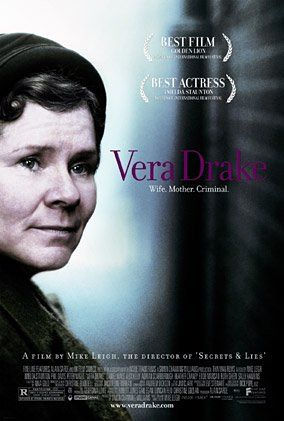
  • Vera Drake (Today, 9pm, Film4) - heavy, depressing but brilliant study of one woman's fight to help young women in desperate need to have an abortion.
  • The Pianist (Sunday, 10.15pm, ITV3) - inspiring, harrowing, Oscar-winning film about the redemptive power of music, set against the backdrop of the Nazi holocaust of Polish Jews.
  • Manon des Sources (Wednesday, 6.50pm, Film4) - beautiful sequel to French film, Jean de Florette, about a rural community torn apart by a battle over a precious water supply.
  • Four Weddings and a Funeral (Wednesday, 9.00pm, Film4) and Notting Hill (Wednesday, 11.15pm, Film4) - two classic British romantic comedies which made a star of Hugh Grant and developed the comedic talents of writer, Richard Curtis (Blackadder and Love Actually)
  • The Player (Friday, 11.10pm, Film4) - important, epic satire of Hollywood, interweaving numerous storylines to show tinseltown in all its cruelty, ugliness and duplicity
And also on television:
  • Indian School (Wednesday, 8.30pm, BBC4) - fascinating series about the Indian education system, eye-opening and educative
  • Reader, I married him... (Tuesday, 11.20pm, BBC2) - Documentary exploring the tradition of the romantic novel, from the classics through to the present day.
  • Balderdash & Piffle (Friday, 10.00pm, BBC2) - study of language and how it develops, focusing this week on euphemisms (and how they end up in the dictionary!)
And out on DVD this week:

  • Babel (15) - one of the most extraordinary films I have ever seen, this looks at just how rubbish human beings are at really communicating with each other, and the dire consequences it can have, all shot through the mesmerising lens of filmmaker Alejandro Gonzalex Inarritu. WARNING: I will be showing this in FILM CLUB in June, so avoid it until then if you are a film club member!

Wide oceans full of tears...

I pictured a rainbow
You held it in your hand
I had flashes
But you saw the plan
I wandered out in the world for years
While you just stayed in your room
I saw the crescent
You saw the whole of the moon

You were there in the turnstiles
With the wind at your heels
You stretched for the stars
And you know how it feels
To reach too high, too far too soon
You saw the whole of the moon

I was grounded
While you filled the skies
I was dumbfounded by truth
You cut through lies
I saw the rain dirty valley
You saw "Brigadoon"
I saw the crescent
You saw the whole of the moon

I spoke about wings
You just flew
I wondered, I guessed and I tried
You just knew
I sighed
And you swooned
I saw the crescent
You saw the whole of the moon

The torch in your pocket
And the wind on your heels
You climbed on the ladder
And you know how it feels
To get too high, too far, too soon
You saw the whole of the moon

Unicorns and cannonballs
Palaces and piers
Trumpets, towers, and tenaments
Wide oceans full of tears
Flags, rags, ferryboats
Scimitars and scarves
Every precious dream and vision
Underneath the stars

Yes, you climbed on the ladder
With the wind in your sails
You came like a comet
Blazing your trail
Too high, too far, too soon
You saw the whole of the moon.
This poem provides the lyrics for the 1985 song, 'The Whole of the Moon' by a band called The Waterboys, and is written by Mike Scott. You can listen to the song here.

I have chosen it because of the way in which the whole poem is built around constant juxtaposition (combining opposites). The narrator finds endlessly creative ways to compare himself with the far superior person to whom he is speaking...

My mother liked to wrestle!

Like most people I lived for a long time with my mother and father. My father liked to watch the wrestling, my mother liked to wrestle; it didn't mater what. She was in the white corner and that was that.

She hung out the largest sheets on the windiest days. She wanted the Mormons to knock on the door. At election time in a Labour mill town she put a picture of the Conservative candidate in the window.

She had never heard of mixed feelings. There were friends and there were enemies.

Enemies were:
The Devil (in his many forms)
Next Door
Sex (in its many forms)
Slugs

Friends were:
God
Our dog
Auntie Madge
The Novels of Charlotte Brontë
Slug pellets

and me, at first, I had been brought in to join her in a tag match against the Rest of the World. She had a mysterious attitude towards the begetting of children; it wasn't that she couldn't do it, more that she didn't want to do it. She was very bitter about the Virgin Mary getting there first. So she did the next best thing and arranged for a foundling. That was me.

I cannot recall a time when I did not know that I was special. We had no Wise Men because she didn't believe there were any wise men, but we had sheep. One of my earliest memories is me sitting on a sheep at Easter while she told me the story of the Sacrificial Lamb. We had it on Sundays with potato.


This is an excerpt from Oranges Are Not The Only Fruit by Jeanette Winterson - a novel about a girl trying to break free from the control of her tyrannical mother and the religious cult to which she belongs.

To read the rest of this excerpt, click here.
To buy the book, click here.
To find it in a local library, click here.
To visit the author's website, click here.

Saturday, May 12, 2007

The First Rambo and the Last King

As requested by many of you in the Web 2.0 survey, each week I will recommend films that you can see a) on terrestrial TV each week; b) on DVD; and c) at the cinema.

Please use the COMMENTS facility to post your own REVIEWS of any of the films each week. And click on the hyperlinks to read reviews of each film; and on the posters to visit imdb.com and find out everything else you need to know...

On TV:
Arlington Road (Sat 12th, 10.40pm, C4) - scary thriller, sure to make you scared of your neighbours
Ray (Tue 15th, 9pm, ITV1) - actor Jamie Foxx brings to life jazz legend, Ray Charles
First Blood (Fri 18th, 11.35pm, BBC1) - iconic, watershed Vietnam movie introducing forgotten veteran Rambo to the silver screen
O (Fri 18th, 12.35am, BBC2) - modern re-telling of Othello, one of Shakespeare's greatest plays

New on DVD:
The Last King of Scotland (15) - Oscar-winning film about the brutal Ugandan dictator Idi Amin's regime
Perfume (15) - Perfume-maker turns serial killer in his search for the ultimate


Out at Cinemas:

Bridge to Terabithia (PG) - Narnia-like fantasy, but with a darker edge

Why bother with punctuation and capital letters?!

anyone lived in a pretty how town
(with up so floating many bells down)
spring summer autumn winter
he sang his didn't he danced his did

Women and men(both little and small)
cared for anyone not at all
they sowed their isn't they reaped their same
sun moon stars rain

children guessed(but only a few
and down they forgot as up they grew
autumn winter spring summer)
that noone loved him more by more

when by now and tree by leaf
she laughed his joy she cried his grief
bird by snow and stir by still
anyone's any was all to her

someones married their everyones
laughed their cryings and did their dance
(sleep wake hope and then)they
said their nevers they slept their dream

stars rain sun moon
(and only the snow can begin to explain
how children are apt to forget to remember
with up so floating many bells down)

one day anyone died i guess
(and noone stooped to kiss his face)
busy folk buried them side by side
little by little and was by was

all by all and deep by deep
and more by more they dream their sleep
noone and anyone earth by april
wish by spirit and if by yes.

Women and men(both dong and ding)
summer autumn winter spring
reaped their sowing and went their came
sun moon stars rain

by e. e. cummings
To read more poems by the miraculous e. e. cummings, click here.

To read about the poet himself, click here.

And to read some famous quotations by cummings, click here.

"Murder, not to put too fine a point on it."

Shelter:
"You sure?" he says. The light's back, and I can see his little brain working. He's thinking, this guy runs a hostel. Warm beds. Grub. It gets full. but if I'm with him, I'm in, right? "You sure?" he says. I gave him the smile again. "Sure. No prob. It's just round the corner."

And that's all there was to it. I strode out and he trotted at my heels like a ruddy poodle. It was pissing it down and he was sodden by the time he reached the flat. I introduced Sappho, showed him the bathroom, told him to strip off, threw in some stuff I'd got for the purpose - thick sweaters, cord trousers - the sort of stuff do-gooders wear - and went off to heat some tomato soup, and while he was sitting on the sofa scoffing it I slipped up behind him and put him out of his misery.

Cruel? I don't think so. He's neither cold nor hungry now. Nobody wanted him, so nobody will miss him, and there's one less dosser to clutter up the place.

Who loses?
Link:
You can call me Link. It's not my name, but it's what I say when anybody asks, which isn't often. I'm invisible, see? One of the invisible people. Right now, I'm sitting in a doorway watching the passers-by. They avoid looking at me. They're afraid I want something they've got, and they're right. Also, they don't want to think about me. They don't like reminding I exist. Me, and those like me. We're living proof that everything's not all right, and we make the place untidy.

Hang about and I'll tell you the story of my fascinating life.


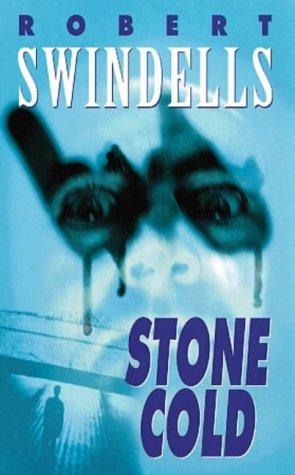
In 1994, Children's author, Robert Swindells, wrote Stone Cold, a novel about a SERIAL KILLER who calls himself Shelter, and who prowls the streets of London killing all the homeless people he kind find - people like Link...

Buy it here (or borrow a copy from the English Dept stock room at school).
Read some reviews here.
Find out more about the author here.

Saturday, May 05, 2007

So how many have YOU read?

Since September, I have recommended 28 DIFFERENT NOVELS to you.


So how many of the novels have you read?

It would do you no harm to have read ALL of them: perhaps you didn't get round to it at the time; perhaps you meant to but then forgot. Either way, use this post to remind yourself about what you read and what you missed - and decide what you will set aside to read over the coming months.

This week, I would like you to use the blog to post COMMENTS in which you recommend the books and poems you have ENJOYED the most. Give as many reasons as possible, so that other readers can decide what they want to try out too...

Here is what I have recommended (click on each one to read the post itself...)

Novels:

From next week, I shall try to make some changes to this blog, in line with the suggestions you have all made in the survey you completed. So watch this space...

Saturday, April 28, 2007

Poem of the Week: 'O Me! O Life!'


Anyone who has seen the Robin Williams film, Dead Poets Society, will have heard his character, Mr Keating, use this poem to try to inspire his students to 'seize the day' (the Latin phrase for which is carpe diem) and make the most of every second they have.

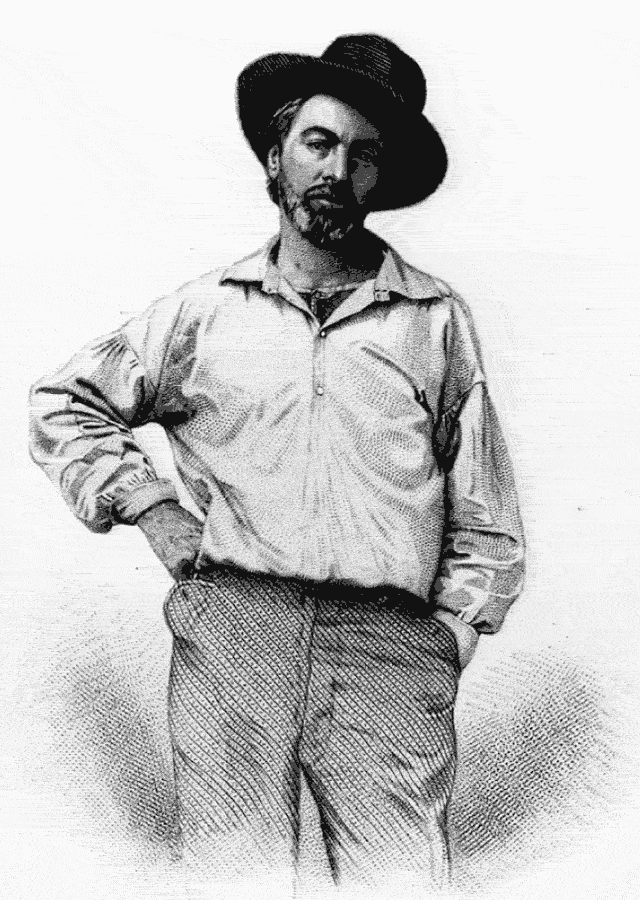
Walt Whitman was a prolific, American poet in 19th Century America, many of whose poems celebrated humankind and the potential for happiness and fulfilment in life. Although so much of literature gives an opposite message, it is hard not to be uplifted by Whitman's words. Yes, life is difficult; yes, the world is full of fools; yes, there are 101 reasons to be miserable. BUT...

So have a read, and then go and make something amazing of your life too...

O ME! O life!... of the questions of these recurring;
Of the endless trains of the faithless—of cities fill’d with the foolish;
Of myself forever reproaching myself, (for who more foolish than I, and who more faithless?)
Of eyes that vainly crave the light—of the objects mean—of the struggle ever renew’d;
Of the poor results of all—of the plodding and sordid crowds I see around me;
Of the empty and useless years of the rest—with the rest me intertwined;
The question, O me! so sad, recurring—What good amid these, O me, O life?

Answer.

That you are here—that life exists, and identity;
That the powerful play goes on, and you will contribute a verse.

Recommended Reading: The Wave


I saw V for Vendetta last week. If any of you have seen it, you will know that it is a futuristic thriller set in an England which is ruled by a terrible dictatorship very similar to Germany under the Nazis in the 1930s. Personal freedom is restricted; the government controls EVERYTHING; and ANYONE who is seen to disagree is imprisoned, tortured or even killed. In that film, it takes a hero to overthrow the government and save the day!

The book I am recommending this week is a different exploration of how easily a society can slip into such a reign of terror, and how easily normal, ordinary people can be sucked into a totally terrifying way of life. But THIS story is set in a SCHOOL!

It is a book called The Wave by Morton Rhue. And it is scary stuff...

You can read the first couple of pages by looking INSIDE the book at amazon here.

Saturday, April 21, 2007

Recommended Reading AND Poem of the Week: Love That Dog


A different idea altogether this week. A few year ago, we bought for the English department at GM, a set of copies of a new novel for teenagers called LOVE THAT DOG. I was captivated by it instantly, apart from anything else because it was SO original.

So there are TWO big reasons to recommend this to you. Firstly, it is fantastic - a blend of both POETRY and FICTION (hence the double blog entry this week). And secondly, don't worry about buying a copy or borrowing one from your library: all you have to do is ask Ms Chiwara very nicely if you can simply borrow one from our stock room at school! :)

This is how the author, Sharon Creech, describes the novel herself:
Love That Dog is the story of Jack, his dog, his teacher, and words. The story develops through Jack's responses to his teacher, Miss Stretchberry, over the course of a school year. At first, his responses are short and cranky: "I don't want to" and "I tried. Can't do it. Brain's empty." But as his teacher feeds him inspiration, Jack finds that he has a lot to say and he finds ways to say it.

Jack is both stubborn and warm-hearted, and he can be both serious and funny. Although he hates poetry at first, he begins to find poems that inspire him. All year long, he is trying to find a way to talk about his beloved dog, Sky, and the poems his teacher offers him eventually give him a way to do that.

Jack becomes especially fond of a poem by Walter Dean Myers titled "Love That Boy," and it is this poem that finally gives Jack a way to tell the whole story of his dog, Sky. In gratitude, Jack invites Walter Dean Myers to visit his class.
And here is an excerpt from the novel (which I found on her website, which you can visit HERE):
Jack

Room 105 -- Miss Stretchberry

September 13

I don't want to
because boys
don't write poetry.

Girls do.

September 21

I tried.
Can't do it.
Brain's empty.

September 27

I don't understand
the poem about
the red wheelbarrow
and the white chickens
and why so much
depends upon
them.

If that is a poem
about the red wheelbarrow
and the white chickens
then any words
can be a poem.
You've just got to
make
short
lines.

October 4

Do you promise
not to read it
out loud?
Do you promise
not to put it
on the board?

Okay, here it is,
but I don't like it.

So much depends
upon
a blue car
splattered with mud
speeding down the road.

October 10

What do you mean
Why does so much depend
upon
a blue car?

You didn't say before
that I had to tell why.

The wheelbarrow guy
didn't tell why.

October 17

What was up with
the snowy woods poem
you read today?

Why doesn't the person just
keep going if he's got
so many miles to go
before he sleeps?

And why do I have to tell more
about the blue car
splattered with mud
speeding down the road?

I don't want to
write about that blue car
that had miles to go
before it slept,
so many miles to go
in such a hurry.

October 24

I am sorry to say
I did not really understand
the tiger tiger burning bright poem
but at least it sounded good
in my ears.

Here is the blue car
with tiger sounds:

Blue car, blue car, shining bright
in the darkness of the night:
who could see you speeding by
like a comet in the sky?

I could see you in the night,
blue car, blue car, shining bright.
I could see you speeding by
like a comet in the sky.

Some of the tiger sounds
are still in my ears
like drums
beat-beat-beating.

October 31

Yes
you can put
the two blue-car poems
on the board
but only if
you don't put
my name
on them.

November 6

They look nice
typed up like that
on blue paper
on a yellow board.

(But still don't tell anyone
who wrote them, okay?)

(And what does anonymous mean?
Is it good?)

November 9

I don't have any pets
so I can't write about one
and especially
I can't write
a POEM
about one.

November 15

Yes, I used to have a pet.
I don't want to write about it.

You're going to ask me
Why not?
Right?

November 22

Pretend I still have that pet?

Can't I make up a pet'
a different one?
Like a tiger?
Or a hamster?
A goldfish?
Turtle?
Snail?
Worm?
Flea?

November 29

I liked those
small poems
we read today.

When they're small
like that
you can read
a whole bunch
in a short time
and then in your head
are all the pictures
of all the small things
from all the small poems.

I liked how the kitten leaped
in the cat poem
and how you could see
the long head of the horse
in the horse poem
and especially I liked the dog
in the dog poem
because that's just how
my yellow dog
used to lie down,
with his tongue all limp
and his chin
between
his paws
and how he'd sometimes
chomp at a fly
and then sleep
in his loose skin,
just like that poet,
Miss Valerie Worth,
says,
in her small
dog poem.

December 4

Why do you want
to type up what I wrote
about reading
the small poems?

It's not a poem.
Is it?

I guess you can

Wednesday, April 04, 2007

Poem of the Week: 'Into my heart on air that kills'


Recited at the end of Nicholas Roeg's 1971 film of the book, Walkabout, this poem by A. E. Housman is a beautiful meditation on memory and the past. I won't spoil it by writing much myself - suffice it to say, you can read into it what you like (like most literature). But I read it as a mourning of lost childhood, and the innocence that dies with the inevitable process of "growing up"...

INTO my heart on air that kills
From yon far country blows:

What are those blue remembered hills,

What spires, what farms are those?


That is the land of lost content,

I see it shining plain,

The happy highways where I went

And cannot come again.


Recommended Reading: Walkabout


Back in 1999, when I was teaching in Muswell Hill, I spent a lazy hour digging through the dusty shelves at the back of the English stockroom, seeking something 'different' to teach to my Year 8 classes. Eventually, I came across a book called Walkabout, by James Vance Marshall. It was a revelation - and my classes and I were quickly mesmerised.

The book tells the story of Mary and her young brother Peter, the only survivors of an aircrash in the middle of the Australian desert. They are facing death from exhaustion and starvation when they meet an Aboriginal boy who helps them to survive, and guides them on their long journey back to safety and 'civilisation'.

Two things fascinated me when I first read it: firstly, the relationship between Mary and the aboriginal boy, both on the cusp of adulthood, and both simultaneously cultures apart and skin-close; and also the minute detail in which Marshall manages to describe the beauty of the plants and animals of the Australian outback.

This is no action-packed adventure - but it is even more intoxicating as a result. A languid, almost meditative exploration of a fundamental culture clash, the trauma of adolescence, and the beautiful landscape of a distant land. Highly recommended (as is the 1971 movie, which I am happy to lend to any of you if you like the book).

For a pre- and post-reading worksheet on the novel, click here.
For a children's review of the novel, click here.

And here is an extract from the novel itself, from where the aborigine first meets the two children:

The girl's first impulse was to grab Peter and run; but as her eyes swept over the stranger, her fear died slowly away. The boy was young - certainly no older than she was; he was unarmed, and his attitude was more inquisitive than threatening: more puzzled than hostile.

He wasn't the least bit like an African Negro, His skin was certainly black, but beneath it was a curious hint of undersurface bronze, and it was fine-grained: glossy, satiny, almost silk-like. His hair wasn't crinkly but nearly straight; and his eyes were blue-black: big, soft and inquiring. In his hand was a baby rock wallaby, its eyes, unclosed in death, staring vacantly above a tiny pointed snout.

All this Mary noted and accepted. The thing that she couldn't accept, the thing that seemed to her shockingly and indecently wrong, was the fact that the boy was naked.

The three children stood looking at each other in the middle of the Australian desert. Motionless as the outcrops of granite they stared, and stared, and stared. Between them the distance was less than the spread of an outstretched arm, but more than a hundred thousand years.

Brother and sister were products of the highest strata of humanity's evolution. In them the primitive had long ago been swept aside, been submerged by mechanization, been swamped by scientific development, been nullified by the standardized pattern of the white man's way of life. They had climbed a long way up the ladder of progress; they had climbed so far, in fact, that they had forgotten how their climb had started. Coddled in babyhood, psycho-analysed in childhood, nourished on predigested patent foods, provided with continuous push-button entertainment, the basic realities of life were something they'd never had to face.

Saturday, March 24, 2007

Recommended Reading: The Tulip Touch


I read this with my first Year 8 class at GM (now Year 11!). Written by Anne Fine (The Flour Babies, Madame Doubtfire etc.), and winner of the Whitbread Children's Book Award in 1996, The Tulip Touch tells the story of an intense and dangerous friendship between two teenage girls - Natalie and Tulip. Natalie cannot escape the allure of Tulip's mysterious ways, but, as things become more and more sinister, she realises that being with Tulip is like playing with fire. And yet, has she gone too far to turn back?

Click here to visit Anne Fine's website.

Here are a couple of extracts from the novel to whet your appetite:

I paid for the privilege (if privilege is what it was). Nobody else would have Tulip in their gang. They knew from experience that she was out of school more than in. (That’s why I’d never seen her.) From that time on, I spent countless hours scuffing alone round the playground, desperately hoping that she’d show up, or that some soft soul in one of the busy swarms of children whooping around me would crack and say the words I longed to hear.
‘Forget silly old Tulip. She’s never here, anyway. Come and play with us.’
I look back and think I must have been mad. What sort of friendship is it when one of the pair is hardly ever there and the other is never permitted to go off and find her?

* * * * *

... I was so mad at her for the sheer stupidness of it (and for ignoring me so horribly) that when she took a gold chain I’d never seen before out of her pocket and twirled it round her fingers, I left Marcie to ask all the questions.
‘Where did you get that?’

‘It’s mine.’

‘Is it real gold, though? Real gold?’

‘Of course it is.’

‘Can I see it?’

‘You’re looking at it.’

‘No, I mean, can I hold it?’
Pleased with her interest, Tulip spilled the chain into Marcie’s hand. Marcie turned to the sunlight and studied it.

‘This is real gold. It’s got that funny mark.’ She raised her eyes to Tulip’s. ‘It can’t be yours.’

‘Yes, it is.’

‘I don’t think so. It must be worth an awful lot.’

The edgy tone I knew so well came into Tulip’s voice.

‘Why shouldn’t it be mine?’

Marcie said nothing, and, with Tulip standing there in her cheap clothes and worn jacket, there was no need.
Furious, Tulip snatched back the necklace and hurled it, glinting and rippling, as far as she could. It flew across the car park like a live snake, and fell with a rattle into the huge rubbish drum beside the wall. We stared.
Then Tulip said to Marcie:
‘I don’t want it any more. You can have it if you find it.’
Marcie hesitated just a shade too long. And then, humiliated by the notion of scrabbling in a dustbin for something cast out by Tulip, she turned her back on us.

‘I don’t want it!’

Poem of the Week: 'Refugee Blues'

This is a photo of the new Holocaust Memorial in Berlin, opened in 2005.

Another poem by W.H. Auden ('Night Mail' and 'Stop all the clocks...'). Auden was fascinated and appalled by Hitler's persecution of the Jews in the 1930s - so much so, in fact, that he married Jewish author Thomas Mann's daughter, Erika, only to ensure her escape from Nazi Germany.

In 1939 - the year of the start of World War Two and also the first Jewish ghettoes in Poland - he wrote this poem,
the reflection of a Jew addressed to another one about the situation of all Jews in Europe. They are homeless, they are not accepted by anyone, they are persecuted, they are less considered than animals: the archetypal refugees...

Refugee Blues
by W. H. Auden

Say this city has ten million souls,
Some are living in mansions, some are living in holes:
Yet there's no place for us, my dear, yet there's no place for us.

Once we had a country and we thought it fair,
Look in the atlas and you'll find it there:
We cannot go there now, my dear, we cannot go there now.

In the village churchyard there grows an old yew,
Every spring it blossoms anew:
Old passports can't do that, my dear, old passports can't do that.

The consul banged the table and said,
"If you've got no passport you're officially dead":
But we are still alive, my dear, but we are still alive.

Went to a committee; they offered me a chair;
Asked me politely to return next year:
But where shall we go to-day, my dear, but where shall we go to-day?

Came to a public meeting; the speaker got up and said;
"If we let them in, they will steal our daily bread":
He was talking of you and me, my dear, he was talking of you and me.

Thought I heard the thunder rumbling in the sky;
It was Hitler over Europe, saying, "They must die":
O we were in his mind, my dear, O we were in his mind.

Saw a poodle in a jacket fastened with a pin,
Saw a door opened and a cat let in:
But they weren't German Jews, my dear, but they weren't German Jews.

Went down the harbour and stood upon the quay,
Saw the fish swimming as if they were free:
Only ten feet away, my dear, only ten feet away.

Walked through a wood, saw the birds in the trees;
They had no politicians and sang at their ease:
They weren't the human race, my dear, they weren't the human race.

Dreamed I saw a building with a thousand floors,
A thousand windows and a thousand doors:
Not one of them was ours, my dear, not one of them was ours.

Stood on a great plain in the falling snow;
Ten thousand soldiers marched to and fro:
Looking for you and me, my dear, looking for you and me.

Saturday, March 17, 2007

Poem of the Week: 'Digging'

It is ST PATRICK'S DAY today, so I thought it would be appropriate to post a poem by an IRISH poet. The poems of Seamus Heaney, Dublin-based poet and winner of the Nobel Prize for Literature, appear on many a GCSE syllabus. In this poem, 'Digging', he shows how, as a child, he looked up to his elders - in this case both father and grandfather.

Seeing his father (now old) “straining” to dig “flowerbeds”, the poet recalls him in his prime, digging “potato drills”. And even earlier, he remembers his grandfather, digging peat. He cannot match “men like them” with a spade, but he sees that the pen is (for him) mightier, and with it he will dig into his past and celebrate them.

To listen to some interviews with the poet, click HERE.

To read more about his life and work, click HERE.

And to read from a GCSE study guide on his poetry, click HERE.

Meanwhile, here is the poem:

Digging
by Seamus Heaney

Between my finger and my thumb
The squat pen rests; as snug as a gun.

Under my window a clean rasping sound
When the spade sinks into gravelly ground:

My father, digging. I look down

Till his straining rump among the flowerbeds
Bends low, comes up twenty years away

Stooping in rhythm through potato drills

Where he was digging.

The coarse boot nestled on the lug, the shaft
Against the inside knee was levered firmly.

He rooted out tall tops, buried the bright edge deep

To scatter new potatoes that we picked
Loving their cool hardness in our hands.

By God, the old man could handle a spade,
Just like his old man.

My grandfather could cut more turf in a day
Than any other man on Toner's bog.

Once I carried him milk in a bottle

Corked sloppily with paper. He straightened up

To drink it, then fell to right away

Nicking and slicing neatly, heaving sods

Over his shoulder, digging down and down
For the good turf. Digging.

The cold smell of potato mold, the squelch and slap
Of soggy peat, the curt cuts of an edge

Through living roots awaken in my head.

But I've no spade to follow men like them.

Between my finger and my thumb
The squat pen rests.
I'll dig with it.

Recommended Reading: Witch Child


The first law against witchcraft was in 1542, followed by more laws in 1563 and 1604, putting in place the death penalty for 'invoking evil spirits and using witchcraft, charms or sorcery whereby any person shall happen to be killed or destroyed'.

But how did you prove someone was a witch? Firstly, lots of paranoia and gossip. Strange woman on the edge of the village who never got married and lives on her own? Probably a witch then...!!!

And the proof? Does she float if thrown into a lake with her hands tied? Does she own a pet animal? Does she have a wart of birthmark? Does she confess after being tortured for days on end? If the answer to any of these questions was YES - then no further proof was needed... (Click HERE to read more about witchcraft trials in Great Britain)

Nowadays, there is no such crime as witchcraft in this country, although it was still considered a crime, for example, in Zimbabwe until last year. (Click HERE to read the news article)

Unsurprisingly, witchcraft has inspired lots of powerful literature over the years. Perhaps the most famous is Arthur Miller's play The Crucible. However, in the year 2000, Celia Rees wrote a fantastic novel for teenagers called WITCH CHILD. Here is an excerpt:

Early March 1659

I am a witch. Or so some would call me. 'Spawn of the Devil,' 'Witch child,' they hiss in the street, although I know neither father nor mother. I know only my grandmother, Eliza Nuttall; Mother Nuttall to her neighbors. She brought me up from a baby. If she knew who my parents are, she never told me.

'Daughter of the Erl King and the Elfen Queen, that's who you are.'

We live in a small cottage on the very edge of the forest; Grandmother, me, and her cat and my rabbit. Lived. Live there no more.

Men came and dragged her away. Men in black coats and hats as tall as steeples. They skewered the cat on a pike; they smashed the rabbit's skull by hitting him against the wall. They said that these were not God's creatures but familiars, the Devil himself in disguise. They threw the mess of fur and flesh on to the midden and threatened to do the same to me, to her, if she did not confess her sins to them.

They took her away then.

She was locked in the keep for more than a week. First they 'walked' her, marching her up and down, up and down between them for a day and a night until she could no longer hobble, her feet all bloody and swollen. She would not confess. So they set about to prove she was a witch. They called in a woman, a Witch Pricker, who stabbed my grandmother all over with long pins, probing for the spot that was numb, where no blood ran, the place where the familiars fed. The men watched as the woman did this, and my grandmother was forced to stand before their gloating eyes, a naked old lady, deprived of modesty and dignity, the blood streaming down her withered body, and still she would not confess.

They decided to 'float' her. They had plenty of evidence against her, you see. Plenty. All week folk had been coming to them with accusations. How she had overlooked them, bringing sickness to their livestock and families; how she had used magic, sticking pins in wax figures to bring on affliction; how she had transformed herself and roamed the country for miles around as a great hare and how she did this by the use of ointment made from melted corpse fat. They questioned me, demanding, 'Is this so?' She slept in the bed next to me every night, but how do I know where she went when sleep took her?

It was all lies. Nonsense and lies.

Sunday, March 11, 2007

Poem of the Week: 'The Second Coming'


Written in 1919, a year after the end of the catastrophic First World War, 'The Second Coming' is W.B. Yeats' attempt to question the state of the world as he saw it. Amid the apocalyptic climate of post-war Europe, where, in the words of Larkin, there would be "never such innocence" ever again, Yeats could no longer find comfort in the idea of a good, healing 'second coming', but started to wonder, instead, if any such event might well be a far more sinister and violent affair: no heroic Christ, but a hellish monster instead...

TURNING and turning in the widening gyre
The falcon cannot hear the falconer;

Things fall apart; the centre cannot hold;

Mere anarchy is loosed upon the world,

The blood-dimmed tide is loosed, and everywhere

The ceremony of innocence is drowned;

The best lack all conviction, while the worst

Are full of passionate intensity.


Surely some revelation is at hand;

Surely the Second Coming is at hand.

The Second Coming! Hardly are those words out

When a vast image out of Spiritus Mundi
*
Troubles my sight: somewhere in sands of the desert

A shape with lion body and the head of a man,

A gaze blank and pitiless as the sun,

Is moving its slow thighs, while all about it

Reel shadows of the indignant desert birds.

The darkness drops again; but now I know

That twenty centuries of stony sleep

Were vexed to nightmare by a rocking cradle,

And what rough beast, its hour come round at last,

Slouches towards Bethlehem to be born?

* Spiritus Mundi:
The phrase "spiritus mundi" (literally "spirit of the world") is a reference to Yeats' belief that each human mind is linked to a single vast intelligence, and that this intelligence causes certain universal symbols to appear in individual minds.